
15.2.2 มีการจัดการฟาร์มที่ใช้ประโยชน์อย่างยั่งยืนใน campus และมีนโยบายในการจัดการฟาร์มอาหารในมหาวิทยาลัย อย่างยั่งยืน
รายละเอียดโครงการ
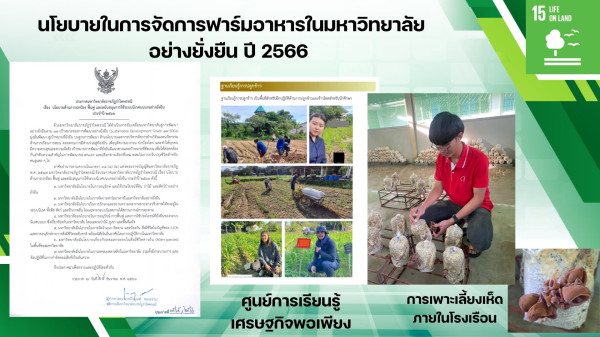
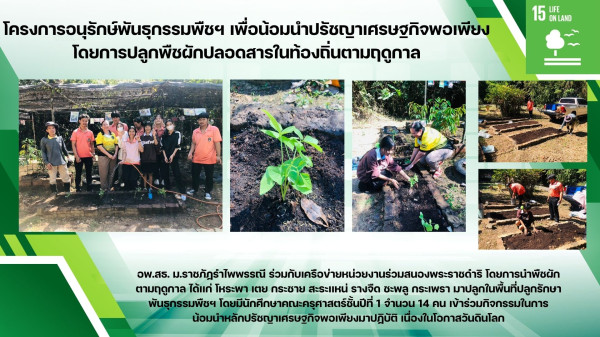
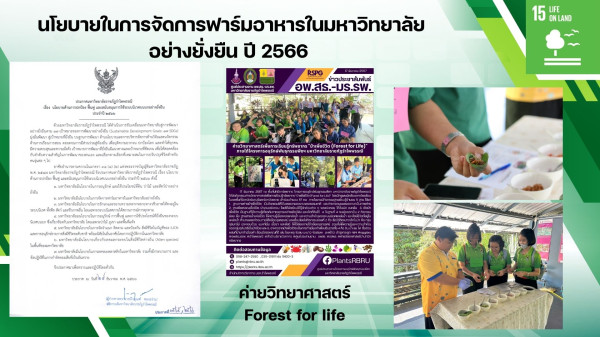
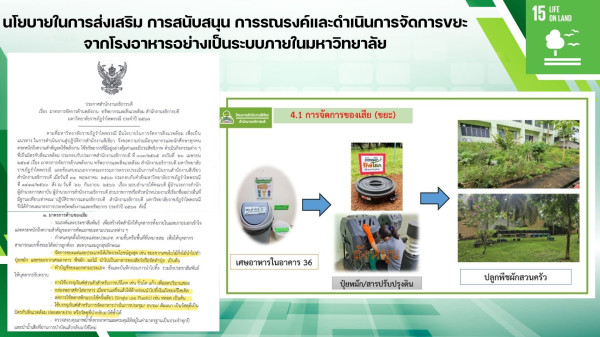
มหาวิทยาลัยมีนโยบายในการจัดการฟาร์มอาหารในมหาวิทยาลัยอย่างยั่งยืน ได้เเก่ การสนับสนุนงบประมาณในการดำเนินงานของศูนย์เศรษฐกิจพอเพียง คณะเทคโนโลยีการเกษตร เพื่อถ่ายทอดองค์ความรู้ และบริการวิชาการด้านการเกษตร ให้เกิดประโยชน์ต่อชุมชนอย่างยั่งยืน เช่น การปลูกข้าว พืชผัก ไม้ผล สมุนไพร เห็ด แปรรูป ทำปุ๋ยและปศุสัตว์ นอกจากนี้มหาวิทยาลัยยังมีการจัดสรรงบประมาณในการดำเนินโครงการอนุรักษ์พันธุกรรมพืชฯ เพื่อน้อมนำปรัชญาเศรษฐกิจพอเพียง โดยการปลูกพืชผักปลอดสารในท้องถิ่นตามฤดูกาล จำนวน 10 ชนิด เช่น ผักกาด พริกขี้หนู ฟัก แตงกวา พริกไทย รวมทั้งการปลูกสมุนไพร เช่น เร่วและกระวาน รวมทั้งการเพาะเลี้ยงเห็ดภายในโรงเรือนในพื้นที่ของมหาวิทยาลัย บูรณาการกับการเรียนการสอนในรายวิชาต่าง ๆ ของมหาวิทยาลัย นอกจากนี้ยังมีการเผยแพร่ให้ให้ความรู้และสร้างความตระหนักเกี่ยวกับอาหารจากป่าเพื่อชีวิตให้กับเยาวชน ผ่านโครงการค่ายวิทยาศาสตร์ Forest for life ปี 2567 รวมทั้งมหาวิทยาลัยมีนโยบายในการส่งเสริม การสนับสนุน การรณรงค์และดำเนินการจัดการขยะจากโรงอาหารอย่างเป็นระบบภายในมหาวิทยาลัย ได้เเก่ การนำไปหมักในโครงการถังหมักรักษ์โลก งานวิจัยที่ใช้หนอนเเมลงวันลายในการกำจัดเศษอาหาร และการนำไปผลิตเป็นสารปรับปรุงดินเสริมการเจริญเติบโตของต้นไม้
The university announced a policy for the sustainable management of on-campus food farms and allocated a budget to support the operations of the Sufficiency Economy Center under the Faculty of Agricultural Technology. The center transferred agricultural knowledge and provided academic services to promote sustainable community benefits through activities in rice, vegetables, fruits, herbs, fertilizers, and livestock production. The university implemented the Plant Genetic Conservation Project under the Royal Initiative by cultivating seasonal, pesticide-free local crops and herbs in the plant genetic conservation area, including mustard, chili, cucumber, and pepper, cardamom, and bamboo cardamom. Mushroom cultivation was also carried out as part of integrated coursework to help students learn through the philosophy of sufficiency living. The university also disseminated knowledge and raised awareness among youth about “forest food for life” through the Forest for Life science camp. Furthermore, a policy was introduced to promote systematic food waste management across the university, including composting through the “Rak Lok Fermentation Bin Project,” research on the utilization of black soldier flies for food waste decomposition, and the production of soil conditioners to support plant growth and environmental sustainability.
ภาพกิจกรรม
ลิงก์ที่เกี่ยวข้อง
SDG ที่เกี่ยวข้อง
 SDG 2 : ขจัดความหิวโหย
 SDG 4 : การศึกษาที่มีคุณภาพ
 SDG 12 : แผนการบริโภคและการผลิตที่ยั่งยืน
 SDG 15 : การใช้ประโยชน์จากระบบนิเวศทางบก